
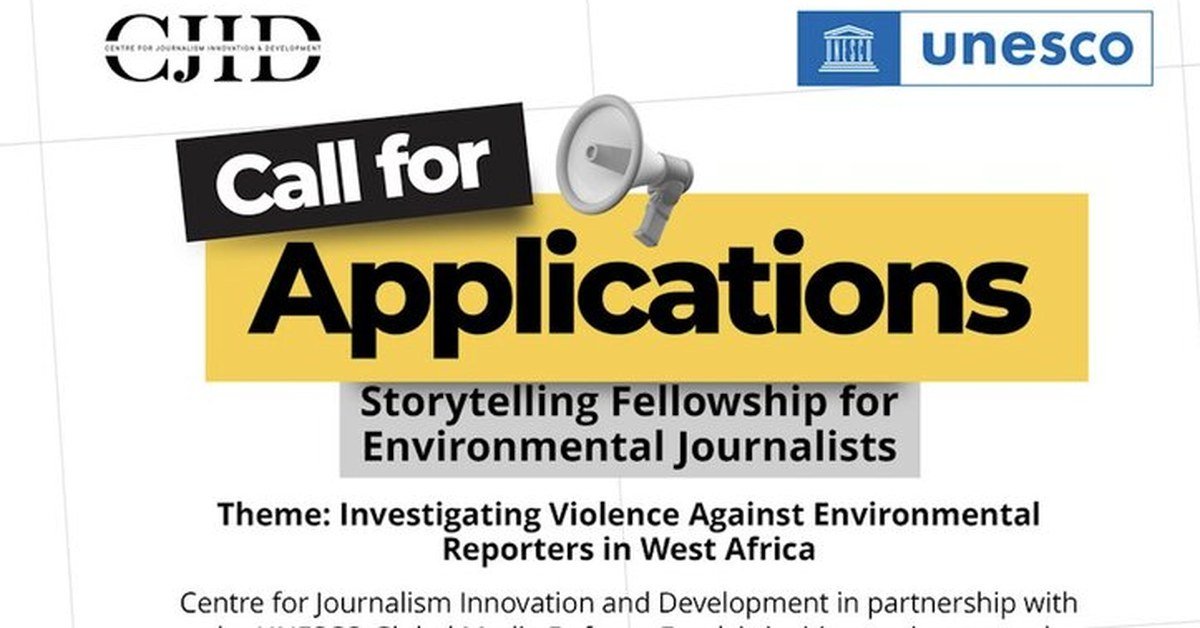

The UNESCO/CJID Storytelling Fellowship 2026 for Environmental Journalists is a unique opportunity for professional journalists to strengthen their capacity in investigative reporting, with a focus on cases of violence against environmental reporters in West Africa. The application deadline for this fellowship is June 08, 2026, and interested journalists are encouraged to apply as soon as possible. This six-month investigative storytelling fellowship is a collaborative effort between the Centre for Journalism Innovation and Development (CJID) and the UNESCO Global Media Defence Fund, aiming to support the production and dissemination of high-quality stories on environmental issues.
About the Opportunity
The Centre for Journalism Innovation and Development (CJID) is a leading organization dedicated to promoting innovative and effective journalism practices in Africa. The CJID has partnered with the UNESCO Global Media Defence Fund to launch the UNESCO/CJID Storytelling Fellowship 2026, which aims to provide training and mentorship for journalists who report attacks against environmental journalists. This initiative is crucial for African journalists, as it addresses the growing concerns of violence and intimidation against environmental reporters, and provides a platform for them to produce and publish high-quality stories that meet international standards.
The UNESCO/CJID Storytelling Fellowship 2026 is designed to support environmental journalists in West Africa, with a focus on investigating violence and threats against environmental reporters. The fellowship will provide a comprehensive training and mentorship program, which will include workshops, online courses, and one-on-one mentoring sessions. The program will also cover the costs of story production, publication, and dissemination, ensuring that the stories produced by the fellows reach a wide audience and have a significant impact on the public discourse.
The fellowship is part of the CJID’s broader efforts to promote media freedom and protect the rights of journalists in Africa. By supporting environmental journalists, the CJID and UNESCO aim to promote a culture of investigative reporting and fact-based storytelling, which is essential for holding those in power accountable and promoting transparency and accountability in the management of natural resources. The fellowship is also an opportunity for African journalists to network with their peers and build relationships with other journalists, editors, and media organizations, which can lead to new collaborations and opportunities for story production and dissemination.
Who Can Apply
The UNESCO/CJID Storytelling Fellowship 2026 is open to professional journalists based in West Africa, with a focus on Ghana, Liberia, Nigeria, Sierra Leone, and The Gambia.
- Professional journalists with a proven track record of reporting on environmental issues are eligible to apply, including freelance and independent journalists.
- Female journalists are strongly encouraged to apply, as the fellowship aims to promote gender diversity and inclusion in the media industry.
- Applicants must be based in one of the eligible countries and have a strong understanding of the local context and the environmental issues affecting their community.
What You Will Gain
The UNESCO/CJID Storytelling Fellowship 2026 offers a unique opportunity for environmental journalists to gain new skills, knowledge, and experience in investigative reporting and storytelling.
- Training and mentorship: The fellowship provides a comprehensive training and mentorship program, which includes workshops, online courses, and one-on-one mentoring sessions with experienced journalists and editors.
- Story production and publication: The fellowship covers the costs of story production, publication, and dissemination, ensuring that the stories produced by the fellows reach a wide audience and have a significant impact on the public discourse.
- Networking opportunities: The fellowship provides an opportunity for African journalists to network with their peers and build relationships with other journalists, editors, and media organizations, which can lead to new collaborations and opportunities for story production and dissemination.
Application Deadline
Do not miss this opportunity to strengthen your capacity in investigative reporting and storytelling. The deadline for applications is June 08, 2026. Start your application early to ensure that you have enough time to complete the application form and submit all the required documents.
How to Apply for UNESCO/CJID Storytelling Fellowship 2026 for Environmental Journalists
To apply for the UNESCO/CJID Storytelling Fellowship 2026, interested journalists should follow these steps: first, review the eligibility criteria and ensure that they meet all the requirements. Second, prepare a strong application package, which includes a cover letter, a CV, and samples of their work. Third, submit their application through the online application form, which can be accessed through the CJID website. Finally, wait for the selection committee to review their application and contact them for an interview or further information.
Apply directly here: Click here to apply
Final Thoughts
The UNESCO/CJID Storytelling Fellowship 2026 is a unique opportunity for environmental journalists to gain new skills, knowledge, and experience in investigative reporting and storytelling. We encourage all eligible journalists to apply for this fellowship and take advantage of the training, mentorship, and networking opportunities it offers. Apply now and take the first step towards becoming a leading environmental journalist in Africa: apply today!